
Plunger pump
Plungers move back and forth in cylinders. Suction and discharge valves open and close on every stroke, so the liquid arrives in pulses.
Pump Comparison
A plunger pump builds pressure with back-and-forth strokes. A pitot tube pump builds head with continuous rotation. The difference shows up in pulsation, wear parts and maintenance.
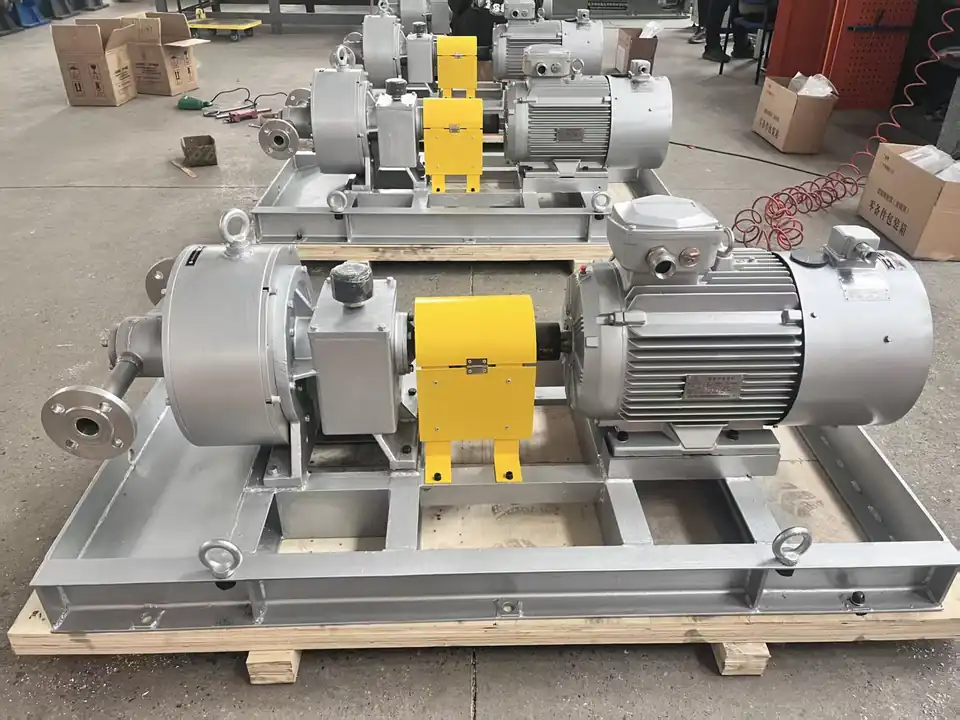
Two Ways to Build Pressure
How each pump moves the liquid decides how smooth the flow is and which parts wear.
Plungers move back and forth in cylinders. Suction and discharge valves open and close on every stroke, so the liquid arrives in pulses.
A rotating casing spins the liquid, and a stationary pickup tube turns its speed into pressure. The delivery is continuous, with no valves or plungers in the liquid path.
Side by Side
The main design differences at a glance.
Swipe or use the arrows to view all columns.
| Feature | EHIK pitot tube pump | Plunger pump |
|---|---|---|
| Delivery | Continuous, low pulsation | Pulsating; pulsation dampeners are often needed |
| Wear parts in the liquid | Pickup tube, rotor and mechanical seal | Plungers, packing or seals, and suction and discharge valves |
| Piping and supports | Rotary pump; little pulsation passes into the piping | Pulsation and vibration must be allowed for in the piping and supports |
| Flow control | Variable speed | Speed or stroke adjustment; bypass return is also common |
| Pressure | Up to 1,050 m (3,445 ft) of head; up to 1,500 m (approx. 4,921 ft) single-stage after engineering review | Can reach much higher pressures |
| Metering | Not a metering pump | Suitable for accurate metering and dosing |
| Liquid viscosity | Below 95 mPa·s (95 cP) | Also handles viscous liquids |
Reasons for a Replacement
EHIK pumps have replaced plunger pumps in customer plants. These are the problems customers reported most often.
Valves, plungers and packing need regular replacement, and each repair takes the pump out of service.
Pressure pulses shake the piping and make a steady process feed harder to hold.
Worn packing and seals start to leak.
As valves and plungers wear, the pump can no longer hold the required pressure.
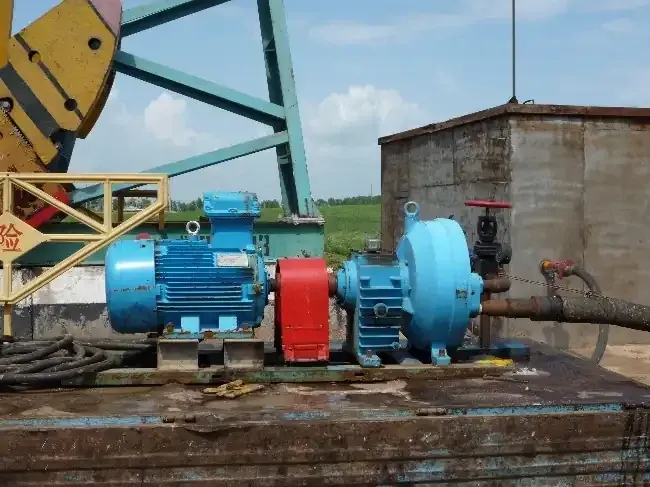
Longhupao Oilfield, Daqing · 2010
An EHIK pump skid did the work of a plunger-pump hot-washing truck. It cleaned more than 100 wells, with 30 litres (approx. 7.9 US gal) less fuel per well and two fewer crew members.
Read the Longhupao case ↗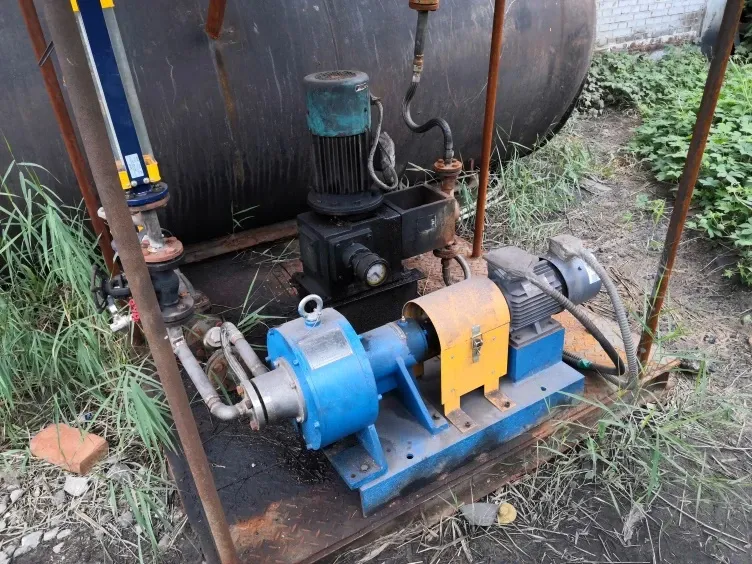
Shanxi Sanqiang New Energy · 2021
EHIK replaced a plunger pump on ammonium nitrate wastewater duty.
A Fair Comparison
Choose the pump that fits the duty.
If the duty needs more pressure than the pitot tube pump range, a plunger pump is the right type.
For exact dosing, choose a metering pump.
At 95 mPa·s (95 cP) or higher, the liquid is outside the pitot tube pump range.
Replacement FAQs
Send the liquid properties, pressure and flow. NPSHa, inlet pressure and discharge pressure make the proposal more accurate.
Not for the pump: a pitot tube pump delivers continuously and does not create the pulses of a plunger pump. Keep any dampeners your process needs for other reasons.
There are no valves or plunger packing. The wear parts are the pickup tube, rotor, mechanical seal and bearings. Wear-resistant pickup tubes are available for liquids with particles.
No. Continuous delivery and exact metering are different needs. If you need dosing accuracy, keep a metering pump.
Yes. EHIK can make the pump flanges to match your existing piping. The baseplate and drive are confirmed on site.
Replacing a Plunger Pump?
Send the liquid, flow and pressure, and describe the maintenance problems. EHIK checks whether a pitot tube pump fits your duty.
Discuss a ReplacementA proposed pump matched to the required liquid duty.
Equipment dimensions for checking the layout and connections.
Help with operating conditions, the proposed pump and supply scope.